

When most people start researching signage types, they usually are not searching by technical sign names. They are searching for solutions to a business problem.
Maybe you need customers to notice your storefront or your building is hard to see from the road. Maybe your office needs more professional interior signage, or your property development needs temporary directional signs. The good news is there are signage solutions built for each of those needs.
In this guide, we’ll break down some of the most common signage types businesses use and explain where each one works best so you can get a better idea of what may fit your project, property, or budget.
“I need a sign for my storefront.”
Your storefront signage is often the first impression customers have of your business. Good storefront signage helps people identify your location quickly, reinforces your branding, and makes your business feel established and professional.
Depending on your building, visibility, budget, and local ordinances, several signage types may work well for storefront applications.
- Awnings — Combine branding with practical weather protection while helping your business stand out from the street.
- Blade signs — Mounted perpendicular to the building to improve pedestrian visibility, especially in walkable downtown areas.
- Building signs — Large, exterior signs mounted directly to the front of your building.
- Channel letter signs — Dimensional lettering that creates a polished, professional appearance with strong visibility.
- Illuminated (halo) signs — Backlit signage that improves nighttime visibility and creates a more modern aesthetic.
- Vinyl graphics — Flexible graphics for windows and doors that can display branding, promotions, hours, or seasonal messaging.
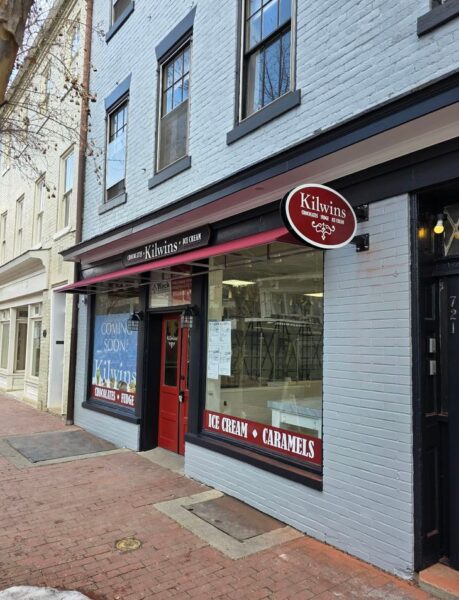
A recent example of combining multiple storefront signage types together can be seen in the installation we recently completed for Kilwin’s Ice Cream in downtown Fredericksburg. The project incorporated an awning, blade sign, building signage, and vinyl graphics to help create a cohesive storefront experience that feels both highly visible and true to the brand.


“I need visibility from the road.”
If customers struggle to notice your business while driving by, roadside visibility becomes the priority. These signage types are designed to attract attention earlier and help customers locate your business more easily. Businesses looking for stronger roadside visibility often consider:
- Electronic message boards — Allow businesses to rotate announcements, promotions, and event messaging. These signs are especially useful for restaurants, schools, churches, and businesses with changing promotions or seasonal offerings.
- Illuminated (halo) signs — Improve visibility during evening hours and crowded commercial traffic conditions.
- Monument signs — Ground-level entrance signs commonly used for offices, churches, developments, and shopping centers.
- Pylon signs — Tall freestanding signs designed for maximum visibility near highways and major roadways. Pylon signs are especially effective for businesses located farther back from the road or surrounded by other commercial properties.
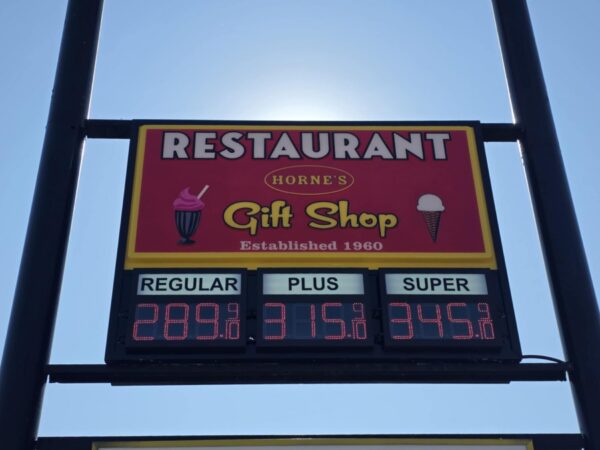
Our installations at Horne’s Restaurant in Port Royal, Virginia combined multiple roadside visibility solutions. Both a pylon sign and an electronic message board were used to help improve visibility from the roadway while also giving the business flexibility to promote specials, events, and updates to passing traffic.

“I need signage inside my office or building.”
Interior signage helps customers and visitors navigate your space while reinforcing your brand throughout the building. Interior signage is often a combination of:
- Acrylic signs — Clean, modern signage commonly used for lobbies, reception areas, and directories.
- Custom office signage — Tailored interior signage systems that align with your branding and space layout.
- Wayfinding signage — Directional signage that helps visitors navigate offices, medical facilities, schools, and multi-suite buildings. Effective wayfinding becomes especially important in larger office environments where visitors may need help locating departments, conference rooms, or entrances.
- Vinyl graphics — Interior wall, window, and door graphics that add branding, privacy, or decorative elements throughout the space. Vinyl graphics also provide a flexible way to reinforce company culture and branding without major renovations.
Systems Planning and Analysis (SPA)’s Alexandria, VA and Washington, D.C. office locations needed the works — acrylic signs, custom office signage, wayfinding signage, and vinyl graphics to create a more cohesive branded experience throughout the offices. This expansion also helped improve navigation and consistency between locations.


“I need temporary or promotional signage.”
Not every sign needs to be permanent. Temporary signage gives businesses the flexibility to promote events, sales, openings, future locations, and seasonal campaigns without long-term installation commitments. Some of the most commonly used temporary signage options are:
- Banners — Versatile signage for events, sales, sponsorships, grand openings, and temporary promotions.
- Real estate signage — Commonly used for property listings, leasing, developments, and directional information.
- Vinyl graphics — Temporary storefront messaging for promotions, seasonal campaigns, or updated branding.
- Yard signs — Affordable signage for events, schools, campaigns, directional needs, and community promotions.
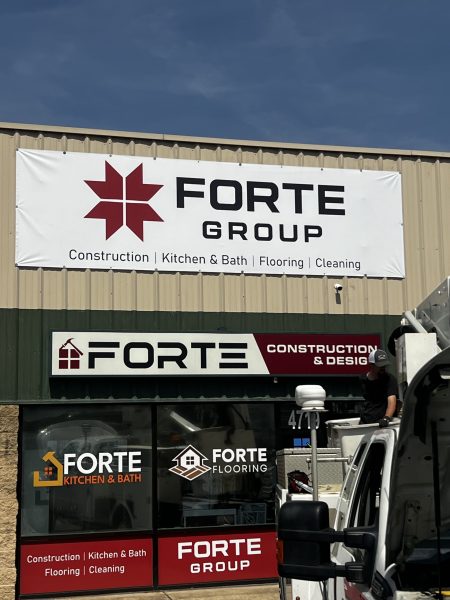
Temporary placeholder banners are often used to help businesses establish visibility before permanent signage is installed. Projects for Forte Group, Hope Heroes Southern Kitchen, and Workhouse Plumbing all used temporary banner signage to create an active storefront presence while future signage plans were still underway.


“I need signage for a property or development.”
Property developments often require multiple signage types working together throughout different stages of the project. From marketing available space to helping visitors navigate the property, signage plays an important role from construction through occupancy. Depending on the property, signage may include:
- Banners — Useful during leasing, construction, or grand opening phases to advertise future tenants or availability.
- Monument signs — Permanent entrance signs that create a professional first impression for residential or commercial developments.
- Pylon signs — Large roadside signs that help attract visibility for shopping centers and multi-tenant properties.
- Real estate signage — Marketing signage for available lots, commercial leasing, or residential developments.
- Wayfinding signage — Directional systems that help visitors navigate larger campuses, office parks, and apartment communities.
- Yard signs — Temporary directional or informational signage used throughout active development projects.
We’ve used several different signage solutions for one of our home builder clients, Atlantic Builders. From banners and monument signs to real estate signage and wayfinding signage, these elements all support brand visibility across several housing developments, as well as in their own internal offices.


“I need my sign repaired or replaced.”
Even high-quality signs eventually need repairs, updates, or replacement. Weather exposure, lighting failures, tenant transitions, outdated branding, and physical wear can all impact how your signage performs over time.
In some cases, a repair is enough. In others, replacing the sign entirely may improve visibility, efficiency, and overall appearance. We can help you assess damages and choose the most cost effective solution.

Choosing the right signage types for your business
Choosing the right signage types depends on your visibility goals, property layout, branding, budget, and local regulations. That’s why many business owners start with the problem they’re trying to solve first rather than the technical terminology.
